
The UAF model, implemented here in Cameo Enterprise Architect, provides several standardized views of the mission architecture (Figure 1), starting with Strategic Structure, dropping down to Operational Structure, and finally dropping down to Services Processes. All these relationships fall within the Cameo tool, but extending our Digital Thread to a wider range of tools requires a new approach.
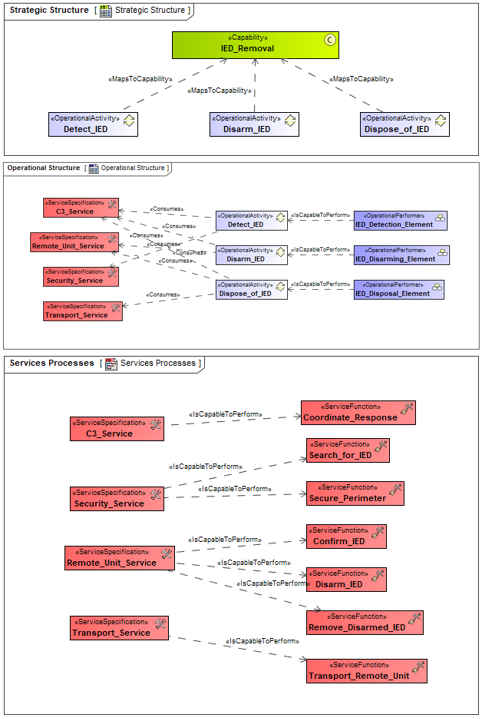
Figure 1 UAF Model diagrams
This new approach is based on graphs. A graph is a simple concept, a collection of nodes and edges (Figure 2), but a powerful one, because most engineering models can be abstracted as graphs. It provides common ground for very heterogenous data sources. In addition, the technology behind storing and querying graphs has advanced enormously in the past few years, largely driven by social networks, but now available to modelers of all types. For those familiar with the field, Syndeia’s graphs are created using the Apache Tinkerpop standard, which is supported by most of the major graph database vendors.
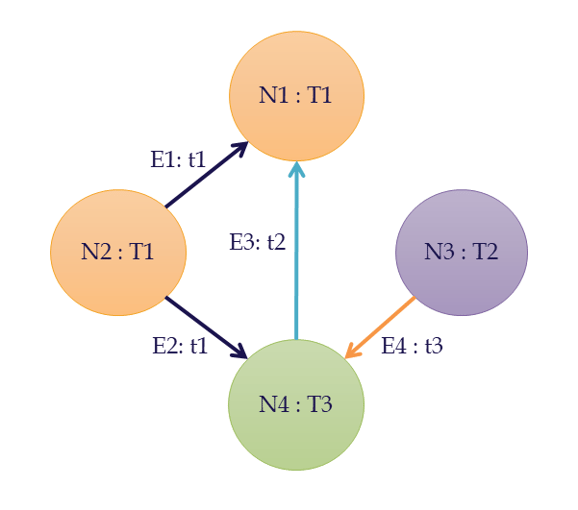
Figure 2 Syndeia graph, typed directed graph with properties
Syndeia stores the connectivity information that makes up the Digital Thread as a graph and can be used to visualize all or part of it. Figure 3 shows what our UAF model looks like as a graph. In this view, both SysML and UAF artifact types are shown as red because they are all part of the same Cameo model, but each node is typed, which distinguishes the different UAF artifact types.
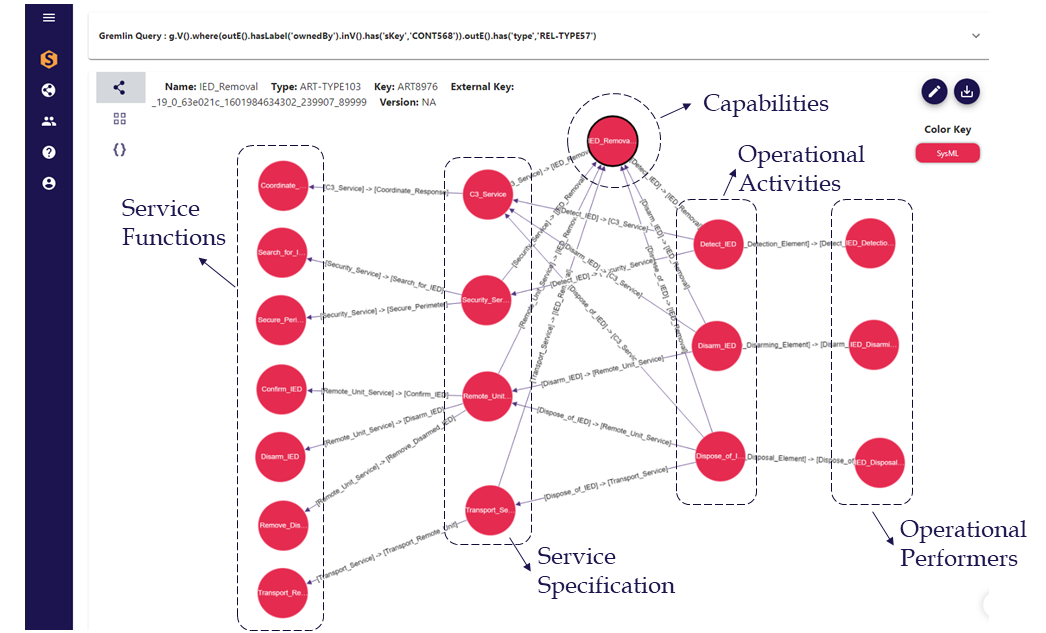
Figure 3 Graph analysis view of UAF model with annotations
Our graph query in Figure 3 was designed to display the artifacts and the relationships from all three diagrams in our UAF model, but the queries can be tailored to show only certain relationship types, such as the Consumes relationship between Operational Activity and Service Specification, or even the relationships associated with a specific model element. Extended chains of connection can be identified and displayed through a specific pattern-matching query.
Next Steps
In forthcoming posts, we will extend the processes of populating and analyzing the Digital Thread beyond UAF. Part 3 will show how a SysML model used to specify the systems intended to carry out the mission fits within the graph framework. In the final part, we will integrate the requirements and project management tools to the UAF mission model, using the graph to identify connections (current, obsolete and missing) between the models.
Related Posts:
- Integrated Model-Based Mission Engineering | Part 1
- Integrated Model-Based Mission Engineering | Part 2 (this post)
- Integrated Model-Based Mission Engineering | Part 3
- Integrated Model-Based Mission Engineering | Part 4